Emergency AC Repair Truths for Every Mohave County Resident
Emergency air conditioning repair in Mohave County is not a luxury. It is a health and property protection service that must function in triple-digit heat, high sun load, and low humidity. Kingman’s elevation, desert dust, and long cooling season create failure patterns that repeat every summer. The following truths reflect what technicians see daily in Kingman, Golden Valley, Valle Vista, White Cliffs, Hilltop, and the Route 66 corridor. They explain why certain parts fail, why systems shut down at 4 pm on a July afternoon, and why the right diagnosis on the first visit matters more here than in milder climates.
Emergency really means emergency in Kingman and across Mohave County
Outdoor temperatures in Kingman often rise above 110 degrees Fahrenheit in late June and July. At approximately 3,330 feet elevation, air density is lower than at sea level. The condenser fan and compressor must work harder to move and reject the same amount of heat. That load, combined with rooftop exposures common along Andy Devine Avenue and the Hilltop area, drives parts to thermal limits. A system that runs marginally in May may not survive the first heat wave in July.
On clear July afternoons, rooftop packaged units on west exposures in the White Cliffs and Downtown Kingman areas often reach cabinet surface temperatures above 150 degrees when ambient air reads 110 degrees. Field infrared readings of 155 to 170 degrees on sun-struck housings are typical. Electrical components inside that cabinet, especially the run capacitor and contactor, see stress that shortens service life. That is why emergency calls spike between 3 pm and 8 pm, exactly when homes and small businesses need cooling the most.
What fails first in Mohave County heat, and why it fails faster here
Capacitor failure is the number one emergency repair in Kingman. The run capacitor helps the compressor and condenser fan start and stay on-speed. At 110 degrees ambient, internal capacitor temperature can exceed its rated spec by a wide margin if the condensing unit is in full sun or if airflow is restricted by a clogged coil. As temperature rises, capacitance value drops. When it drops far enough, the compressor cannot start under load. The unit hums, trips a thermal protector, or the breaker opens. Homeowners describe it as the AC trying and failing to start every few minutes. That is classic short cycling from a weakened or failed capacitor, though contactor pitting and low line voltage can contribute.
Contactor failure runs a close second. The contactor switches high current to the compressor and condenser fan. Under high-heat, high-duty-cycle conditions in Kingman and Golden Valley, contacts arc more often. Pitting increases resistance and heat. Eventually the contactor welds closed or fails to close at all. Welded contacts keep the compressor running even when the thermostat is not calling, which invites a freeze-up on the evaporator coil inside. A contactor that fails open leaves a dead outdoor unit and warm air from the vents.
Refrigerant charge issues are common during the first major heat wave. Systems that held marginal charge through spring cannot maintain evaporator temperature when load spikes. The evaporator coil in the air handler ices, airflow drops, and supply air warms. In Kingman’s dry climate, icing can appear even at 78 degrees indoor setpoint if charge is low and airflow is restricted by a dirty air filter or a matted evaporator coil. Small leaks at flare connections on ductless mini split systems and at Schrader cores on split systems are frequent culprits. Equipment using R-410A shows sharper performance loss with undercharge than legacy R-22 units, because R-410A systems operate at higher pressures and need precise superheat and subcooling.
Blower motor failures show up as low airflow, a hot smell, or tripped breakers. Heat load in Mohave County drives long run times. Motors that do not get proper amp draw checks during routine HVAC maintenance run beyond design temp. Add desert dust accumulation on blower wheels and you get airflow cuts that mimic ductwork leaks. ECM motors in newer systems fail differently than PSC motors. An ECM can fault on its internal module after thermal stress, which requires an exact-match replacement or a factory-authorized retrofit.
Thermostat malfunctions appear in the first week of July every year. Batteries die, wall heat from afternoon sun in Hilltop and Locomotive Park area homes skews readings, and older programmable thermostats lose calibration. A thermostat that reads two degrees low will overwork the system all afternoon, which drives up electricity bills and accelerates run capacitor failure.
The elevation effect that most homeowners never hear about
Kingman’s elevation reduces condenser performance by a measurable amount. Lower air density at around 3,330 feet means the fan moves fewer pounds of air per minute across the condenser coil for a given RPM. Heat transfer drops. That can shave several percent off effective capacity on a hot day. On its own, the effect is small. Add low humidity, intense solar radiation on the condensing unit, and a coil that has not been cleaned since last monsoon season, and the margin disappears. This is why a central air conditioner that is “3 tons on paper” may behave more like a system with 5 to 10 percent less capacity during the worst hours of a Kingman afternoon.
This also explains why packaged units on rooftops along the Andy Devine Avenue corridor see shorter lifespans than shaded split systems in the Hualapai Mountain area. Higher cabinet temperature, more vibration exposure, and long duty cycles stack the deck against the compressor, contactor, and capacitor. A split system condenser shaded on the north side of a Valle Vista home generally fares better through July and August.
Symptoms that signal a real emergency in Kingman heat
Not every AC problem is an emergency in a coastal town. In Mohave County, many are, because the home gains heat fast once cooling stops. The following symptoms indicate risk to health, property, or both. They justify an immediate call for air conditioning repair, not a next-business-day visit.
- System attempts to start every few minutes, hums, then shuts off. This can be a failed run capacitor or high head pressure. Prolonged attempts can burn a compressor winding. Warm air from vents during late afternoon with a running outdoor fan. Low refrigerant or a failed compressor is likely. Continued operation risks ice buildup and water damage from a clogged condensate line when thawing. Breaker trips at the condenser after a few seconds of operation. A shorted compressor, a locked rotor, or a contactor fault may be present. Repeated resets can damage wiring and the compressor. Indoors heats past 85 degrees with vulnerable occupants present. At 110 degrees outside, indoor temperatures can climb above 90 within an hour in many Kingman homes, especially near Route 66 west-facing structures. Water dripping from the air handler or staining near the ceiling for rooftop package units. A clogged condensate drain or pan overflow can damage drywall and attract mold if not stopped quickly.
The real reasons emergencies peak in the late afternoon
Three technical factors stack up between 3 pm and 8 pm on clear days in Kingman and Golden Valley. First, west-facing walls and windows absorb direct sun, which spikes indoor heat gain just as the outdoor temperature peaks. Second, grid voltage can sag slightly during highest demand, which leaves already stressed compressors with less starting torque. Third, the condensing unit sits in the hottest air of the day and often in direct sun. Coil discharge temperatures rise, subcooling drifts, and thermal limiters begin to trip. A unit that ran fine at noon can fall off a cliff at 5 pm with only a small additional variable, like a dirty air filter or a contactor whose coil is on its last legs.
Commercial rooftop units along the Kingman Airport corridor and near the Mohave County Fairgrounds see an extra penalty. Roof surfaces radiate heat that can push ambient near the intake into the 120 to 130 degree range even when official shade readings are 110. Without clean condenser coils and within-spec fan motors, these systems lose headroom fast and trip on pressure or temperature.
How professional diagnosis prevents repeat failures
True emergency service does more than swap a part. It verifies the root cause. A failed run capacitor can be the result of heat alone, but it can also be a symptom of a hard-starting compressor, a fan motor pulling high amps, or a condenser coil that is matted with dust from last season’s windstorms. Replacing the capacitor without addressing the load that killed it guarantees another call when the next heat wave hits.
Experienced technicians in Kingman use a short list of decisive tests when time matters. They measure capacitor microfarads under load, check contactor voltage drop, confirm compressor locked rotor amps against nameplate, and read superheat and subcooling to verify refrigerant circuit performance. A quick delta-T at the supply and return is not enough. Static pressure across the air handler tells the rest of the airflow story and often flags a clogged filter or matted evaporator coil fins in homes near the Hualapai Mountain Park dust plume after windy days.
For ductless mini split systems common in newer Valle Vista and Fort Mohave builds, the diagnostic path shifts slightly. Technicians check for oil at flare fittings on the refrigerant line, listen for reversing valve chatter on heat pump models, and verify the indoor fan ramp profile. Low charge in a mini split can hide for months, then show up as poor cooling only in late afternoon. Without gauges rated for R-410A and precise temperature clamps, the diagnosis can miss by a mile.
What makes refrigerant leaks in Mohave County different
Low humidity and dust are a tough combination. Dust transported by afternoon winds settles in condenser fins and on coil surfaces. Fins become slightly abrasive. When vibration from the compressor or fan resonates at certain frequencies, tubes can rub at support points and develop pinhole leaks over time. This effect is more common in older Rheem, Goodman, and York systems with condensers that sit in unshaded spots in Golden Valley and along Route 66. Schrader cores at service ports also age faster in high heat, which causes slow leaks that only show up as performance loss at the first long heat wave.
Refrigerant choice matters. R-410A is standard today. R-454B will replace it in many systems manufactured from 2025 onward. R-454B runs at similar pressures but has different glide and handling characteristics. It requires EPA 608 certified technicians and service tools matched to the refrigerant. A mixed charge from improper service kills capacity. A correct refrigerant recharge puts the system back on spec. A dye test or nitrogen pressure test confirms leak points if electronic detection is inconclusive in the wind that is common in Kingman afternoons.
The surprising local truth about filters, dust, and coil icing
Homeowners in Kingman often replace filters more often than national guides suggest, yet technicians still find frozen evaporator coils in July. The reason is Mohave County’s dust load and the timing of peak use. Fine dust bypasses lower grade filters and adheres to the leading edge of the evaporator coil. At peak load, that thin layer increases air-side pressure drop. Airflow falls below the minimum for the tonnage. Coil temperature drops below 32 degrees even with a correct refrigerant charge. Ice begins at the distributor tubes and grows outward. The symptom looks like low charge but is airflow related. A professional cleans the evaporator, confirms external static pressure, and only then makes a charge decision. That order prevents repeat freeze-ups and unnecessary refrigerant additions.
Heat pumps in Kingman: special emergency patterns
Heat pumps serve many homes in South Kingman, Valle Vista, and New Kingman-Butler. In cooling season, the reversing valve sits in the cooling position and must shift cleanly when commanded. A valve that hesitates in high heat can chatter or stick, which throttles flow and floods the compressor with liquid refrigerant. In a July emergency visit, technicians often find a slightly underpowered low voltage signal from a thermostat or a worn solenoid at the valve. Both conditions show up in late afternoon when head pressure is highest. Correcting the control signal and verifying refrigerant metering at the TXV valve protect the compressor from a catastrophic slug.
Packaged rooftop units along Andy Devine Avenue and in Hilltop behave differently
Many older homes and small commercial spaces in central Kingman and the Andy Devine Avenue corridor use packaged rooftop units rather than split systems. Emergency calls on these units have distinct signatures. Access panels warp slightly over time from heat, which allows hot roof air to infiltrate the equipment section. That air raises internal cabinet temperature and confuses controls. Contactor coils run hotter and fail earlier. Fan belts slip and glaze when roof temperature spikes, which cuts airflow over the condenser coil and triggers high pressure safeties. A correct repair restores belt tension or replaces worn pulleys, cleans coils, and seals panels to limit infiltration. Quick fixes without these steps do not last through the next 110 degree day.
Evaporative coolers and combo homes along the Route 66 corridor
Some Kingman homes still run evaporative coolers as a backup or in shoulder months. The jump between a swamp cooler and a central air conditioner can mask AC failures. Residents switch to the evaporative cooler when the central air conditioner seems weak, then switch back during a heat wave and discover the AC now cannot keep up at all. Mineral scale from Mohave County’s hard water can also aerosolize and settle on nearby condenser coils, especially in tight side yards. That unintended overspray reduces heat rejection right when the AC needs perfect airflow. A complete emergency visit near Route 66 and Downtown Kingman often includes coil cleaning to remove scale dust from a neighbor’s cooler drift.
Commercial and multifamily properties near Kingman Regional Medical Center and Kingman Airport
Emergency calls for small commercial buildings and multifamily properties cluster near Kingman Regional Medical Center, Kingman Airport, and the Mohave Museum of History and Arts area. These systems often use larger split systems or packaged units with multi-stage compressors. Stage one may continue to run during a stage two failure, which masks the issue until the hottest day of the month. Technicians verify staging logic, check the contactor stack, and inspect the condenser coil for fouling that affects one circuit more than the other. Improper staging in late afternoon doubles energy use and still leaves tenants hot. Fixing a failed capacitor on the second stage without correcting an airflow bottleneck across that circuit’s condenser section guarantees another failure on the next 112 degree day.
Brands seen most in Mohave County, and what that means for emergency parts
Technicians across Kingman regularly service Trane, Lennox, Carrier, Goodman, Rheem, York, Bryant, Daikin, American Standard, and Mitsubishi Electric ductless systems. Emergency repairs succeed when the truck carries common OEM-rated components. That means stocking dual run capacitors in the most common microfarad ratings for Goodman and Rheem package units, contactors sized for Carrier and Bryant condensing units, hard start kits tested for Lennox scroll compressors, and control boards for popular Trane air handlers. Using universal parts can get a system cooling fast, but the goal is to meet the original equipment specifications. This matters in high heat, because off-spec components often run hotter and fail sooner under Mohave County loads.
Why airflow numbers matter more here than filter change reminders suggest
In Kingman’s dry heat, sensible load dominates. Systems that are slightly undersized struggle on west exposures from Golden Valley to the Locomotive Park area, and airflow misadjustments tip them into emergency territory. Static pressure measurements tell the truth. A total external static of 0.9 inches water column on a residential air handler rated for 0.5 indicates ductwork restrictions or an over-ambitious filter upgrade. The symptom is low airflow and warm supply air during late afternoon. A quick capacitor swap will not hold. The corrective move is to restore airflow by addressing ductwork leaks, returns undersized for the tonnage, or restrictive media. Ductwork leak repairs also drop attic heat load into the return path, which cuts run time and component temperature. That is the difference between a temporary fix and a stable repair that survives 110 degrees in July.
Shareable local fact for Kingman homeowners
At Kingman’s elevation, a typical 3 ton central air conditioner can deliver 150 to 500 BTU per hour less cooling on a 108 degree afternoon than the same model at sea level, solely due to reduced condenser air density. That small loss becomes large when combined with a dirty condenser coil and direct sun. Shading a west-facing condenser in Hilltop or White Cliffs without blocking airflow can recover enough performance to drop indoor temperature another degree or two during peak hours. This is why homes along Route 66 that add coil cleaning and airflow verification to emergency service often report faster temperature recovery the very same evening.
How emergency AC service differs between neighborhoods
Downtown Kingman and the Locomotive Park area feature older homes with a mix of package units and split systems. Many condensers sit in tight side yards with radiant exposure. Golden Valley homes often face wide open sun with strong afternoon winds that carry dust and tumbleweed debris. Valle Vista homes frequently use split systems with condensers that see more shade but face dust that enters the evaporator from garage returns. Hualapai Mountain area homes get some altitude and shade benefit but still push systems hard during July. Each microclimate requires a slightly different emergency checklist. The constant is the need for decisive testing and on-truck parts that match the local equipment mix.
Why same-visit resolution is realistic in Kingman
Most emergency failures in Mohave County concentrate in a small set of components. Run capacitors, contactors, blower motors, fan capacitors, condenser fan motors, TXV valve issues at the evaporator, clogged condensate lines, and thermostat failures account for a large share of calls. With the right inventory and test equipment, technicians can resolve these in a single visit, even after hours. Compressors and major coil leaks require more planning, but accurate diagnosis on the first trip prevents wasted cooling hours and repeat truck rolls during the hottest week of the year.
What a properly equipped emergency truck carries in Mohave County
Residents often ask what makes a difference during a 7 pm service call in July. The answer is preparation. The truck matters as much as the technician. The inventory is built for Kingman’s equipment mix and failure modes.
- Dual run capacitors in common values for Goodman, Rheem, York, and Carrier condensers, plus start capacitors and potential relays for scroll compressors. 2 pole contactors sized for typical residential and light commercial loads, with coil voltages matched to OEM specs. ECM and PSC blower motors with universal mounting hardware, plus OEM-specific modules for common Trane and Lennox air handlers. TXV valves, filter driers, R-410A and R-22 compatible service kits, and gauges ready for R-454B systems as they enter the market. Drain cleaning tools for condensate line blockages, pan float switches, and wet vac setups for attic air handler emergencies.
Residential and commercial realities in Mohave County zip codes
Emergency AC calls span the full Kingman area and beyond. Zip codes 86401, 86409, and 86413 see most residential dispatches, from the Andy Devine Avenue corridor to the Hualapai Mountain area and Golden Valley. Fort Mohave and Mohave Valley experience even higher peak temperatures and a mixed sensible and latent load due to proximity to the Colorado River. That mixed load demands closer scrutiny of airflow and refrigerant charge to maintain coil temperature without icing. Lake Havasu City and Bullhead City push systems even harder on humidity spikes but share the same failure patterns for capacitors, contactors, and condenser fouling.
How commercial HVAC emergencies differ, and how to stabilize them quickly
Commercial HVAC systems in Kingman often include economizers, multi-stage compressors, and larger ductwork trunks with balancing dampers. In emergency cooling loss at a small medical office near Kingman Regional Medical Center, the most common issue is not a catastrophic compressor failure. It is a stuck economizer damper that pulls 120 degree outside air during peak hours or a single failed stage that leaves half the capacity unavailable. Correcting the damper position, verifying enthalpy control, and restoring the failed stage can put the space back within acceptable temperature limits that evening. For restaurants along Route 66, condenser coils near grease-laden exhaust areas require deeper cleaning under load. Skipping this step after replacing a failed contactor or capacitor leads to immediate high head pressure trips during the dinner rush.
Rooftop packaged units and safety in emergency scenarios
Emergency service on rooftops in Kingman has another dimension. Metal surfaces exceed skin-burn thresholds by early afternoon. Proper ladder use, tie-off, and panel handling are not niceties. They prevent emergency ac repair injury and speed the repair. Rooftop access in older White Cliffs properties may be limited by hatch or parapet design. If access is delayed, the technician still can stabilize cooling by running the blower in continuous mode to flush attic heat, or by prioritizing any supplemental cooling source present at the property, such as an evaporative cooler in an adjacent zone. Once roof access is available, electrical and refrigeration checks proceed with an emphasis on contactors, capacitors, condenser fans, and coil cleanliness. Safety does not slow the process when the truck carries the parts that fail most often in this environment.
How installation quality years ago shows up in today’s emergency
Many Kingman homes built or retrofitted in the 1990s and early 2000s along the Andy Devine Avenue corridor and near Downtown Kingman received packaged rooftop units sized using rules of thumb. During a 112 degree afternoon, these units operate at the edge of their envelope. If the original duct design undersized return air or placed supply registers where solar gain is highest, the system must run longer and hotter to carry the load. That design choice shows up today as repeated capacitor failures, contactor burnout, and sometimes compressor overheating. A correct emergency repair restores today’s cooling, then the technician notes any chronic design limits and offers a path to stabilize performance, such as return resizing, duct sealing, or a future right-sized system from a brand like Trane or Lennox with a Manual J calculation. Even a small airflow correction can add years to component life in Mohave County.
Truths about warranties, parts, and the desert
Manufacturers such as Carrier, Goodman, affordable emergency ac repair Rheem, York, and Lennox publish operating limits and expect professional service that keeps systems within spec. Mohave County conditions press against those limits. Coils must stay clean. Electrical connections must be tight. Fan motors must be in their designed amp range. Warranties do not cover failures caused by chronic neglect. That is why well-documented emergency service that includes electrical readings, refrigerant measurements, and airflow data protects the homeowner as much as the technician. The data shows the system ran within design after the repair. It also gives a reference point if the next heat wave exposes a deeper problem.
Where emergency speed meets technical depth
Emergency AC repair is not guesswork and not a race to replace parts. In Kingman, success is a blend of speed and precision. The technician arrives prepared to test, decide, and repair in conditions that punish weak components and expose marginal installations. Every measurement taken in the first ten minutes cuts risk of a misdiagnosis that would collapse under the 5 pm sun. That is why the right company trains on refrigeration theory, electrical diagnosis, airflow measurement, and local building stock. The goal is not a cool gust of air that fades. The goal is stable cooling through the evening and a path to make the next heat wave less dramatic.
Service coverage with local precision
Emergency AC service covers Kingman and surrounding Mohave County communities with exact familiarity. Calls range from historic homes along Route 66 and the Mohave Museum of History and Arts, to newer subdivisions near Hualapai Mountain Park, to manufactured homes in Golden Valley, to golf course properties in Valle Vista. Zip codes 86401, 86409, and 86413 define most of the map, but crews also serve Fort Mohave, Mohave Valley, Bullhead City, Lake Havasu City, Chloride, Hackberry, and Dolan Springs. Each area brings its own patterns. The service model adapts to them rather than forcing a generic checklist.
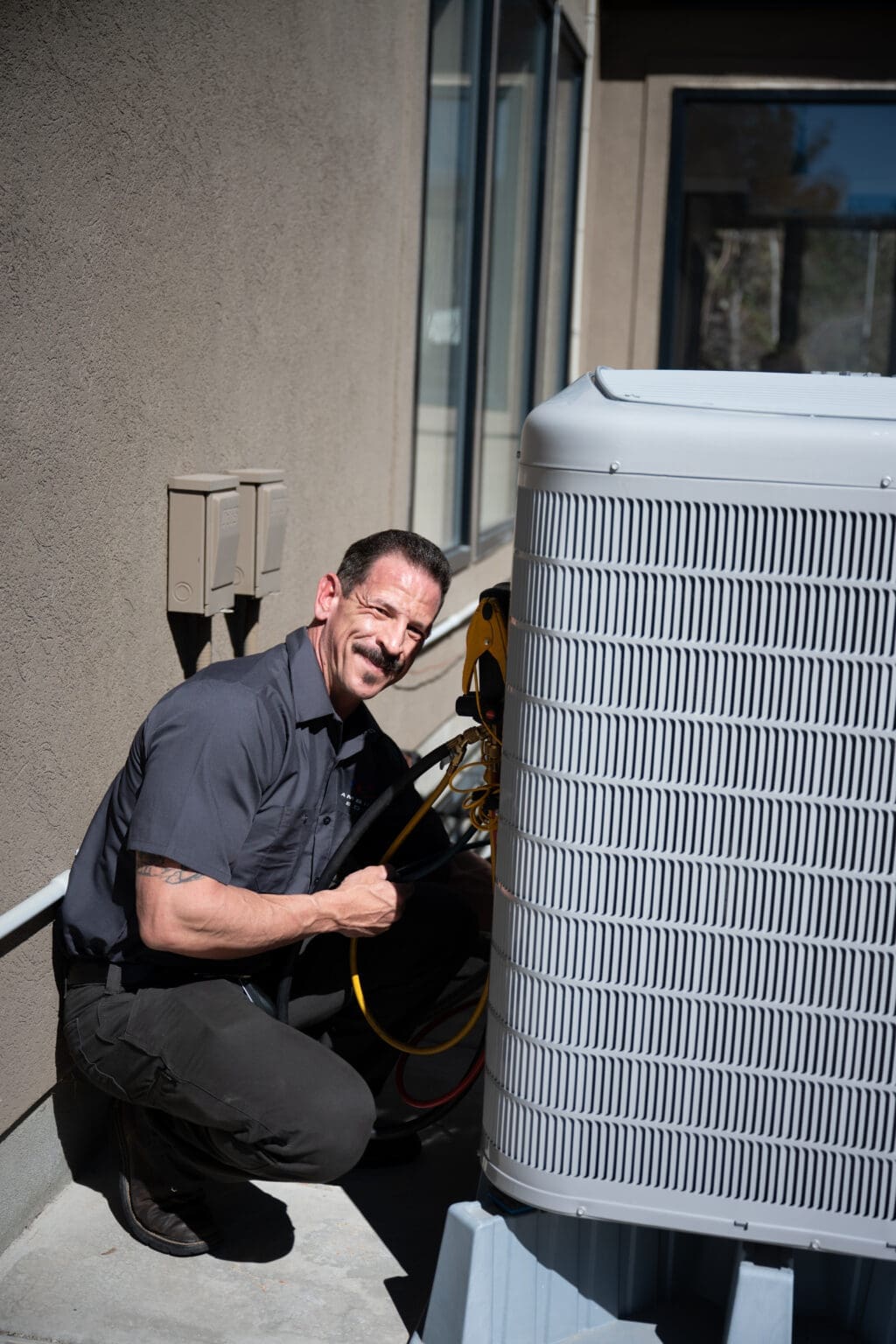
For homeowners comparing repair and replacement during an emergency
Some emergencies reveal a compressor that is shorted to ground or a coil that leaks beyond economical repair. Mohave County load profiles make these decisions urgent. Replacing a failed compressor on a 15 year old Goodman or York packaged unit in direct sun can cost more in future failures than installing a new system that uses current technology. Newer Trane, Lennox, and Carrier systems using R-410A today, with R-454B oncoming, deliver steadier performance when sized by a Manual J and paired with ductwork that meets static pressure targets. The correct path is case by case. The deciding factors include age, coil condition, duct design, refrigerant type, and the home’s orientation. A solid emergency service visit gathers that data even if the comfort decision waits for morning.
What residents near Kingman Regional Medical Center and Arizona Western College should expect from a qualified emergency technician
Expect a professional who listens to the symptom, verifies power and low voltage control, confirms or clears airflow restrictions, tests electrical components with the correct meters, and documents readings. Expect gauges connected only after airflow and electrical checks indicate a refrigerant circuit issue. Expect a clear explanation delivered in plain language. Expect a repair plan that stabilizes cooling now and reduces the chance of repeat failure during the next evening peak. This is the service standard for Mohave County where the climate gives little forgiveness for sloppy work.
Why Mohave County households and businesses call one company for urgent AC failures
Emergency AC repair is not a line item. It is a discipline shaped by desert heat, elevation, dust, and housing stock. Teams that carry the right parts for Trane, Lennox, Carrier, Goodman, Rheem, York, Bryant, Daikin, American Standard, and Mitsubishi Electric solve most failures on the first visit. Crews that know Kingman’s streets from the Andy Devine Avenue corridor to the White Cliffs and Hilltop neighborhoods arrive fast. Technicians trained on refrigerant R-410A today and prepared for R-454B tomorrow keep systems on spec. That is why property managers near Kingman Airport and homeowners off Route 66 ask for the same company when the house is at 88 degrees and climbing at 6 pm in July.
Ready for fast help that holds through the evening heat
Ambient Edge Heating, Air Conditioning and Refrigeration Inc. Serves Kingman and all of Mohave County with 24/7 Emergency HVAC Service, including Air Conditioning Repair, HVAC Repair, Refrigerant Recharge, AC Maintenance, Duct Cleaning, Heat Pump Repair, Ductless Mini Split Service, and Commercial HVAC support. Technicians are NATE certified and EPA 608 certified. Arizona ROC Licensed HVAC Contractor, ROC #296317. Service covers Kingman zip codes 86401, 86409, and 86413, and nearby communities including Golden Valley, Fort Mohave, Mohave Valley, Bullhead City, Lake Havasu City, Chloride, Hackberry, and Dolan Springs. Calls are answered every hour of every day, with flat-rate pricing provided in writing before work begins. New system installations include a 10 year parts and labor warranty, and financing is available. For emergency air conditioning repair anywhere from the Andy Devine Avenue corridor to the Hualapai Mountain area, call (833) 226-8006 or visit https://www.ambientedge.com/kingman/. Service operates 24 hours a day, 7 days a week, 365 days a year.
Ambient Edge Heating, Air Conditioning & Refrigeration Inc.
Our Location:
3270 Kino Ave,
Kingman,
AZ
86409
Phone: +1 928-615-8224
Web: www.ambientedge.com